Review – Provence, 1970

Hello everyone,

Before we leave for Frankfurt, I’ve got another review for you. As you all know, Clarkson Potter provided me with an ARC of Provence, 1970 by Luke Barr a while ago. The book will be out on October 22 in the US, Austria, Germany,… and obviously on November 20 in the UK.
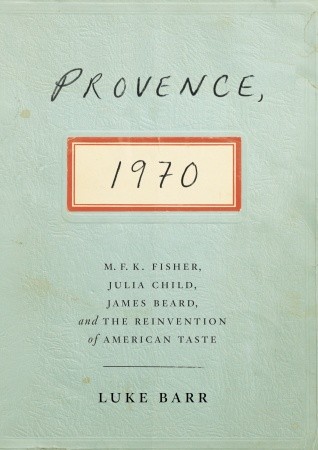
Image provided by Random House¹
Summary quoted from Random House¹:

Provence, 1970 is about a singular historic moment. In the winter of that year, more or less coincidentally, the iconic culinary figures James Beard, M.F.K. Fisher, Julia Child, Richard Olney, Simone Beck, and Judith Jones found themselves together in the South of France. They cooked and ate, talked and argued, about the future of food in America, the meaning of taste, and the limits of snobbery. Without quite realizing it, they were shaping today’s tastes and culture, the way we eat now. The conversations among this group were chronicled by M.F.K. Fisher in journals and letters—some of which were later discovered by Luke Barr, her great-nephew. In Provence, 1970, he captures this seminal season, set against a stunning backdrop in cinematic scope—complete with gossip, drama, and contemporary relevance.

My Thoughts:

Provence, 1970 is a historical non-fiction book that mainly deals with M.F.K. Fisher’s 1970 trip to Provence. The author Luke Barr was able to make me feel Provence in some parts of the book, which is more than I would expect of a work of non-fiction. Provence, 1970 even offers dialogues which sometimes made me wonder if I wasn’t reading a novel after all. The explanation for this comes at the end of the book (at least in the ARC), where Barr lists all his sources. Unfortunately, there weren’t any footnotes in the text (again, in the ARC). I would have liked that, but I do understand that there are people who feel disturbed by them.

Provence, 1970 was an informative and entertaining read. As I wasn’t well acquainted with any of the iconic culinary figures besides Julia Child, the book offered new information. I also really liked that Barr went to France to visit the Childs’ Provence home to get his own perspective. Overall, Provence, 1970 is a mouth-watering work of non-fiction for people who like good food, travel writing, the 1970s, France and American cooks.

bohnen4s

¹http://www.randomhouse.com/book/202688/provence-1970-by-luke-barr
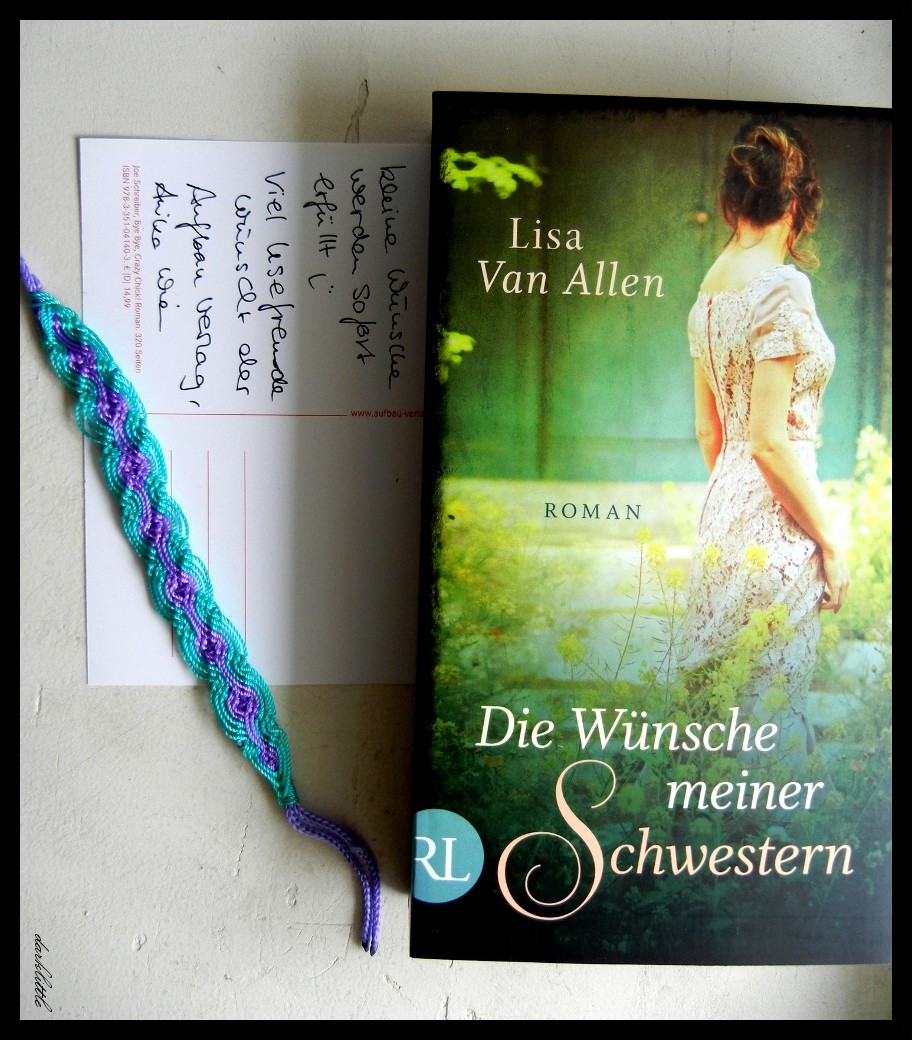
Review – The Wishing Thread

Hi there,

It’s me again 🙂 I’m back with my review of Lisa Van Allen‘s The Wishing Thread. As I’ve told you before, I got a German-language copy for a book discussion at Lovelybooks. Aufbau Verlag even added a matching bracelet :).

It is very important to know that I read the German translation of the book because I’m going to say something about the writing style in my review and I am well aware that the writing style can change through translation. I also had a quick look at the fist 30 pages of the English original and they read better than the German version.

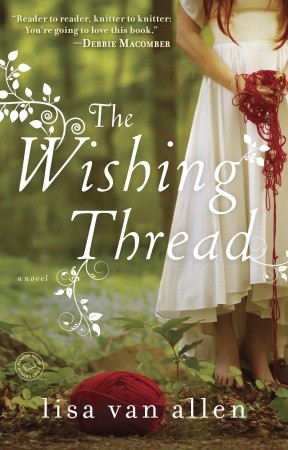
Which cover do you prefer? The German cover, or the English one? Tell me in the comments below 🙂

The German edition Ruetten & Loening Verlag (Aufbau)
The English cover provided by Random House¹
More on the German edition can be found here.
Summary of the English edition quoted from Random House¹:

The Van Ripper women have been the talk of Tarrytown, New York, for centuries. Some say they’re angels; some say they’re crooks. In their tumbledown “Stitchery,” not far from the stomping grounds of the legendary Headless Horseman, the Van Ripper sisters—Aubrey, Bitty, and Meggie—are said to knit people’s most ardent wishes into beautiful scarves and mittens, granting them health, success, or even a blossoming romance. But for the magic to work, sacrifices must be made—and no one knows that better than the Van Rippers.

When the Stitchery matriarch, Mariah, dies, she leaves the yarn shop to her three nieces. Aubrey, shy and reliable, has dedicated her life to weaving spells for the community, though her sisters have long stayed away. Bitty, pragmatic and persistent, has always been skeptical of magic and wants her children to have a normal, nonmagical life. Meggie, restless and free-spirited, follows her own set of rules. Now, after Mariah’s death forces a reunion, the sisters must reassess the state of their lives even as they decide the fate of the Stitchery. But their relationships with one another—and their beliefs in magic—are put to the test. Will the threads hold?

My thoughts on the German translation:

The Wishing Thread is mainly set in 21st century Tarrytown, a city south of Sleepy Hollow and north of Manhattan. Lisa Van Allen’s writing style is very descriptive and she uses a metaphorical language to describe the setting. I particularly liked the stitchery. Even though it is described as an old, rundown house, it has its charm. In the German translation, the writing style and the time the book is set in clashed. The writing style made me think of a setting in the 19th century. This stiff language seemed outdated to me and every time there was an indication of the 21st century (e.g. a mobile phone), I was shocked like a time traveler. What didn’t help either, was the German cover that (in my opinion) also suggests a historical setting.

There are quite a lot of important characters in this book. The main character, however, is Aubrey. She’s the guardian of the stitchery and she’s a tad old-fashioned. She was easy to identify with at the beginning of the book. The further I read on, the harder it got to identify with a young woman who grew up in the 20th century and thought like an oppressed and naive woman from the 19th century. In one scene, I also felt like this about her sister Bitty. Apart from this problem with Aubrey, the other characters were nicely crafted. I really liked Aubrey’s niece Nessa, who made the story more lively. The bit I read about aunt Mariah was great, because Mariah radiates warmth and comfort. I also enjoyed Mason Boss. From the second he entered the stage… I can’t tell you more. But I like how he was written to life.

The Wishing Thread is a creative and unique story. It’s a story about family bonds. Magic plays a minor role in this book just like the love story. If you are a knitter, you’re in for a treat. Knitting is a big topic and all the chapter headings involve knitting terms that somehow relate to the content of the chapters if you have the time to think about them (at least that’s what I think). There’s another treat for knitters, but I don’t want to tell you too much. In my opinion, The Wishing Thread is a light and entertaining read for people who like to read stories about families and knitting.

My rating for the German translation of The Wishing Thread:

bohnen3s

¹ http://www.randomhouse.com/book/221371/the-wishing-thread-by-lisa-van-allen

Review – Nocturnes: Five Stories of Music and Nightfall

Who comes to your mind when you are asked to think about post-colonial British authors? Close your eyes for a few seconds; think hard; then open your eyes and tell me what you came up with. Hmh, let me think …. Kazuo Ishiguro! Does the name ring a bell? Yes? Excellent! I think it’s time to talk about one of Britain’s most eminent writers. He has won the Booker Prize for The Remains of Day in 1989. Even though his last publication was some time ago, in 2009 to be exact, this does not mean that it’s too late to talk about Nocturnes: Five Stories of Music and Nightfall.

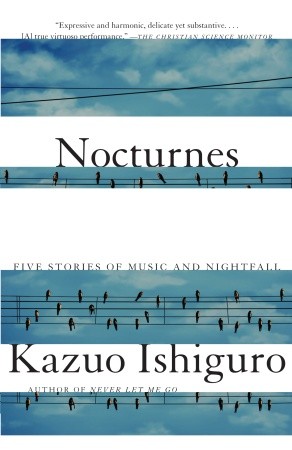
nocturnes
Image provided by Random House¹
Summary quoted from Random House¹:

With the clarity and precision that have become his trademarks, Kazuo Ishiguro interlocks five short pieces of fiction to create a world that resonates with emotion, heartbreak, and humor. Here is a fragile, once famous singer, turning his back on the one thing he loves; a music junky with little else to offer his friends but opinion; a songwriter who inadvertently breaks up a marriage; a jazz musician who thinks the answer to his career lies in changing his physical appearance; and a young cellist whose tutor has devised a remarkable way to foster his talent. For each, music is a central part of their lives and, in one way or another, delivers them to an epiphany.

My Thoughts:

Nocturnes is Ishiguro’s first collection of short stories and consists of five parts: “Crooner”, “Come Rain or Come Shine”, “Malvern Hills”, “Nocturne” and “Cellist”. What bind the stories together are recurring themes and characters which are all tightly connected with music, musicians and music lovers. They are all written in prose style and every story has its own delightful and charming twist.

Basically, Nocturnes tells the story of people who have not yet fulfilled their dreams, about people who live ordinary lives and about the sacrifices they have to make every day. We all have a vision of who we are, but very often the world does not allow us to fulfill your dreams. All the characters in Nocturnes struggle with their lives; some get it right, some get it wrong, but they all have to overcome obstacles. I guess this is what makes the book so attractive to us normal ones. It shows that fictional characters are not superheroes after all.

When I got hold of Nocturnes, I expected to really love this collection and I have to admit that I found it wonderful in parts. It would be a lie to claim that Nocturnes is absolutely superb, because there are a few flaws in the novel. But all in all, it’s a nice and entertaining read for everyone who likes humorous, cynical and serious stories.

bohnen3s

¹ http://www.randomhouse.com/book/85610/nocturnes-by-kazuo-ishiguro

Review – Life After Life

Hello there,

I’ve just finished what could become my personal book of the year 2013. I’m practically speechless, but I should write a review here, so I’ll see what I can come up with 😉 Oh, I almost forgot. The book I’m talking about is Life After Life by Kate Atkinson which was shortlisted for the 2013 Women’s Prize for Fiction.

Lifeafterlife
Image provided by Hachette Book Group¹
Summary quoted from Hachette Book Group¹:

What if you could live again and again, until you got it right?
On a cold and snowy night in 1910, Ursula Todd is born to an English banker and his wife. She dies before she can draw her first breath. On that same cold and snowy night, Ursula Todd is born, lets out a lusty wail, and embarks upon a life that will be, to say the least, unusual. For as she grows, she also dies, repeatedly, in a variety of ways, while the young century marches on towards its second cataclysmic world war.
Does Ursula’s apparently infinite number of lives give her the power to save the world from its inevitable destiny? And if she can — will she?

My Thoughts:

Life after Life is mainly set in 20th century England and boy does Ms. Atkinson know how to create setting. I lay there in the grass, looking up at the sky. I breathed sun-filled air as well as gas. I saw the clear skies on the mountains and the darkness of muggy cellars. And then I went to war and found myself on top of a collapsed building, searching for survivors, while bombers were still dropping their deadly cargo all over London.

As you can see, Ms. Atkinson not only did a great job describing the setting, she also created a main character that I could easily identify with. This main character is Ursula and I loved to follow her through her many lives. Although follow seems to be the wrong word, as I often became one with Ursula. We simply merged. I seldom thought that one of her decisions was the wrong one. There are many other characters in Life After Life. Each of them is unique. I like how Ursula has a stronger bond with some and a weaker with others. Just like in real life.

I have never read a story like Life After Life and I think it is brilliant. In the beginning, I had no idea how the story is going to work out. The only thing I knew was that Ursula was able to live her life over and over again. I like where Ms. Atkinson takes her and how she let the story end. I love that this book offers so many emotions. Throughout the story there is love, loss, pain, hope, sorrow and happiness. You get the whole package. Life After Life is a book that shows you how much can change by deciding to do something different. I fully recommend this book to everyone!

bohnen5s

¹https://www.hachettebookgroup.biz/titles/kate-atkinson/life-after-life/9780316176484/

Review – A Tale for the Time Being

As I’ve already told you a few days ago, I finished a book that took me a while to read. This book is A Tale for the Time Being by Ruth Ozeki, which is currently shortlisted for the Man Booker Prize. I had a copy on my bookshelf from my Book Depository win this spring, so I decided to give it a go.

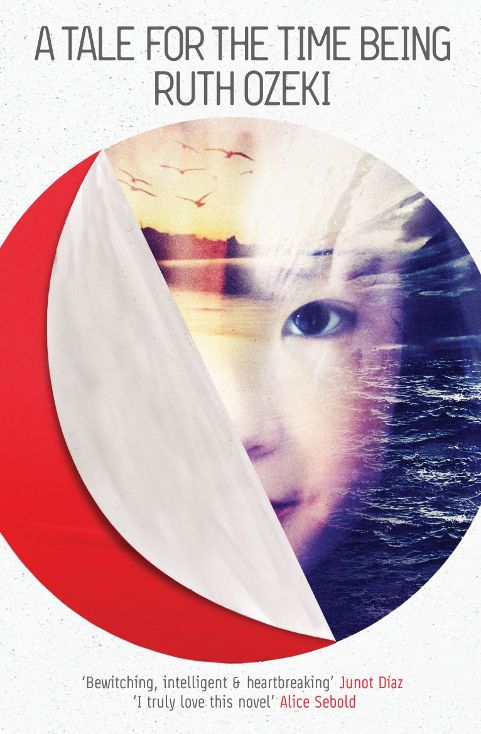
A Tale For The Time Being
Image provided by Canongate¹
Summary quoted from Canongate¹:

‘Hi! My name is Nao, and I am a time being. Do you know what a time being is? Well, if you give me a moment, I will tell you.’

Ruth discovers a Hello Kitty lunchbox washed up on the shore of her beach home. Within it lies a diary that expresses the hopes and dreams of a young girl. She suspects it might have arrived on a drift of debris from the 2011 tsunami. With every turn of the page, she is sucked deeper into an enchanting mystery.

In a small cafe in Tokyo, sixteen-year-old Nao Yasutani is navigating the challenges thrown up by modern life. In the face of cyberbullying, the mysteries of a 104-year-old Buddhist nun and great-grandmother, and the joy and heartbreak of family, Nao is trying to find her own place – and voice – through a diary she hopes will find a reader and friend who finally understands her.

My Thoughts:

A Tale for the Time Being is mostly set in the 21st century in Japan and Canada. The dominance of the setting changes with the location. The island where Ruth lives felt very clear to me. However, this could be because I’ve already been to British Columbia and Vancouver Island and know what the landscape looks like. But also the temple in Japan and its surroundings were clear, in contrast to Tokyo, which seemed blurry to me. Ms. Ozeki also uses the weather to create and intensify mood especially in Ruth’s chapters. I really like this concept.

The two main characters are Nao and Ruth. Even though Nao is 16 years old, she often acts like she is 14 or younger but on the other hand, she does things that (in my opinion) don’t fit her childish behavior. Well, let’s say, Nao has problems, which is hardly surprising if you read her story. Nevertheless, Nao’s character wasn’t always very believable throughout the book. I preferred Ruth. Her character seems to lead a steady life, but if you take a closer look, it isn’t all roses. Ruth is fascinated by Nao’s diary and wants to know all about that girl from Japan. I was really able to connect with Ruth, at least until the last few pages. Two other characters that I think were great are Nao’s father Haruki and Nao’s great-grandmother Jiko.

Now on to the hardest part (at least for me). The story. For the first ~125 pages, I had massive problems getting into the book. I was thinking about giving up on reading, because I didn’t care what was going to happen to Nao or to anyone else in the book. The only thing that kept me going was the fact that I hardly give up on a book. So I read on and it did get better. I finally wanted to know about Nao’s (and her father’s) fate. Sometimes, I even felt distracted by Ruth’s story between Nao’s passages. But there were still things that I didn’t like. There was too much talk of Zen Buddhism in the book and, unfortunately, the book started to get quite boring again towards the end (even though I like the main idea of the ending). Maybe A Tale for the Time Being just wasn’t meant for a time being like me.

bohnen3s

¹ http://www.canongate.tv/a-tale-for-the-time-being.html

Review – Crafty Creatures

Hi there,

As I felt pretty crafty today, I thought I’d try to create one of those lovely little guys in Jane Bull’s Crafty Creatures. (I hope you all remember that digital ARC I got from DK Books a while ago) Well, the book was published last week (at least in the US. It will be out in the UK next week), so, if you like what you see, you’ll be able to buy it 🙂

Image linked from DK Books¹
Summary quoted from DK Books¹:

Packed with more than 30 inspiring ideas, from fat felt cats, to dangly octopuses and zany pom-pom pals, Crafty Creatures and author Jane Bull help you create your own world of colorful, cuddly animals, as well as phone pouches, purses, jewelry, and more!

With helpful templates and patterns alongside basic sewing techniques, Crafty Creatures includes simple step-by-step instructions with detailed photographs to make sure everyone can accomplish any project in the book.

My Craft & My Thoughts

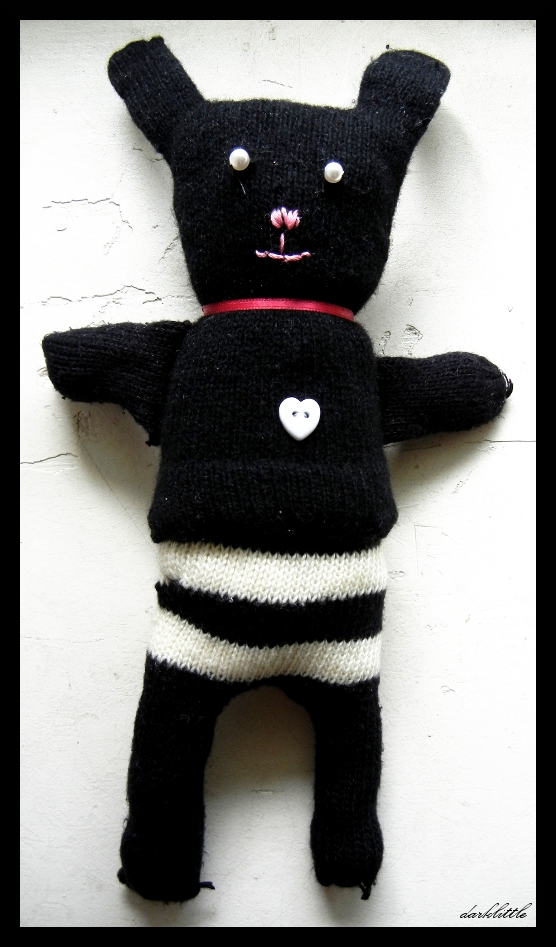
When I leafed through the book, I was instantly in love with one creature in particular. It was a little bunny made of an odd pair of old (or new if you like) gloves. The bunny (called Odd Bod in the book) looked so cute and it seemed like the perfect upcycling idea that wouldn’t be too hard to do. So I decided to make one. And after about one hour of work (well, I didn’t work constantly I guess), this is my result:

bunny

Now back to the book.

It is divided into 5 chapters: Woolly Animals, Friends in Felt, Sew Cute, Animals in Stitches and Sewing Kit and Useful Know-how

Woolly Animals features the following crafts: Woolly Octopus, Knittens, Koala Bear and Friends, Li’l Ted, Odd Bods, A Box of Monkeys, Ducklings

This is my favorite chapter. I think the creatures in it are big enough to play with. Plus, there is something for every difficulty level. And there are crafts that reuse material that would have otherwise been thrown away.

Friends in Felt includes: Pocket Pets, Big Pets, Mobile Owls, Cozy Cats, Minimals, Templates, Wild Ones, Bees and Bugs

The crafts in this chapter are cute and I love felt. They all are pretty flat though. And I don’t really know what to do with most of them. The mobile is an exception. And there is a tip to turn the small, flat animals into brooches, which is a nice idea.

Sew Cute features: Dog’s Best Friends, Pretty Birdies, Bunny Girls, Doodlephants, Your Little Pony, Jolly Giraffe, Cat’s Bed

This chapter has bigger designs than the last one. The Bunny Girls are made to play with and so is the Jolly Giraffe (which has a great design by the way). I also like the idea of the Doodlephants: They are plain elephants you can draw on, so you can create a unique creature. Great idea for a party!

Animals in Stitches shows you how to do: Pictures in Stitches, Pet Portraits, Stitch a Doodle, Doodle Decorations

There aren’t any real creatures to craft in this chapter. It just shows you how to stitch animals and how to use stitched things in your projects.

And Sewing Kit and Useful Know-how includes the chapters: Creating Creatures, How to Stitch, Spring Chickens, Mice Made Easy, How to Knit, Knit Stitch, Purl Stitch, Knitting Shapes

This chapter is very useful, as it explains steps that are the basis for some crafts.

To sum it up, I think that Crafty Creatures is a very nice book for people who are interested in starting to knit or sew cute little animals. There are some ideas to pick up for experienced crafters, but I think that beginners and less-experienced people will have more fun with this book (especially if they have an interest in knitting!). As I’ve mentioned before, some of the crafts are small and quite flat, so their purpose isn’t quite clear. I think they could make nice decorations for presents (if the gifted person appreciates the effort). So decide for yourself if this is the book for you. I definitely enjoyed making that cute little bunny!

bohnen3s

¹ http://us.dk.com/nf/Book/BookDisplay/0,,9781465409140,00.html?strSrchSql=crafty+creatures/Crafty_Creatures_Jane_Bull#

Review – Perfect

Hello again,

Last week I received a review copy of Perfect by Rachel Joyce. Lovelybooks and RandomHouse UK (Doubleday) had another great cooperation (oh how I love them for these, I can’t say it enough) and I received the copy to participate in a Lovelybooks book discussion.

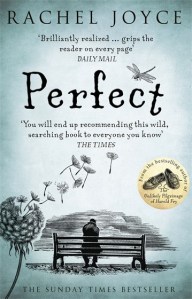
Perfect
Image provided by Black Swan¹
Summary quoted from RandomHouse UK¹:

Summer, 1972: In the claustrophobic heat, eleven-year-old Byron and his friend begin ‘Operation Perfect’, a hapless mission to rescue Byron’s mother from impending crisis.

Winter, present day: As frost creeps across the moor, Jim cleans tables in the local café, a solitary figure struggling with OCD. His job is a relief from the rituals that govern his nights.

Little would seem to connect them except that two seconds can change everything.
And if your world can be shattered in an instant, can time also put it right?

My Thoughts:

Perfect is set in England in the 1970s and in the present. I really enjoyed how Rachel Joyce described different processes. Like for example the process of sugar cubes being dropped into cups of tea. She does that brilliantly.

The main characters are a boy called Byron and a man called Jim. Unfortunately, I wasn’t able to connect that well with Byron. Maybe it also has to do with the storytelling. I’ll talk about that later on. I was however perfectly able to empathize with Jim. I was able to feel every single emotion he felt. And many of them weren’t that pleasant. So be aware that this book is only for people who aren’t depressed, because it will most probably make you feel depressed.

As I already mentioned above, Perfect features two main characters. There are two strings of storyline – one set in the 1970s and wrapping around Byron’s life, and one set in the present, telling us more about Jim. In my opinion Byron’s story, which seems to be the main plot, is really slow-paced. This might also have to do with it being written in past tense. More than once, I caught myself looking forward to another chapter about Jim. To me, Jim’s story seems much more lively, probably because it written in present tense and because it really is much more lively. There are things happening in Jim’s storyline, whereas a lot of Byron’s storyline is spent planning and waiting. I also missed a real climax in the book. As I mentioned before, I really liked how Ms. Joyce described processes. This is fine writing. Still, I was a little disappointed after all the praise I’ve read about Perfect. I’d recommend it to people who don’t mind a slow and depressing read.

3 Star Rating: Recommended

¹ http://www.randomhouse.co.uk/editions/perfect/9780552778107

Review – The Last Banquet

It’s Monday, and as most people don’t like Mondays, I thought I’d make this Monday a better Monday for some of you. Or at least I’ll try to do so. (Wow that were a lot of Mondays 😀 )

It’s review time for The Last Banquet by Jonathan Grimwood. I really enjoyed reading it 🙂

And that Kindle offer I was talking about is still on.

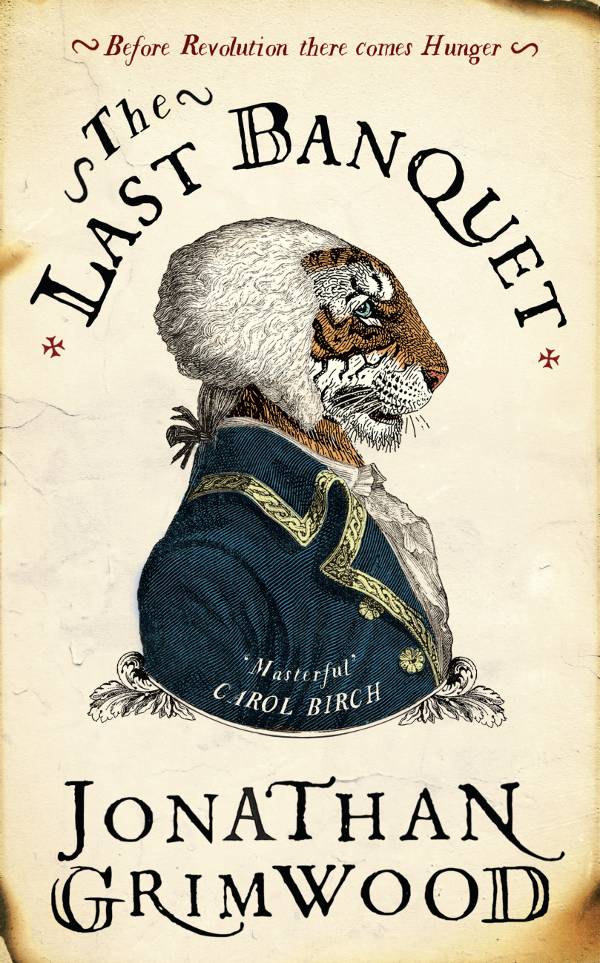
Image provided by Canongate
Summary quoted from Canongate¹:
Jean-Marie Charles d’Aumout is many things.
Orphan, soldier, diplomat, spy, lover.
And chef.This is his story.We meet Jean-Marie d’Aumout as a penniless orphan eating beetles by the side of a road. His fate is changed after an unlikely encounter finds him patronage and he is sent to military academy. Despite his frugal roots, and thanks to wit and courage in great measure, he grows up to become a diplomat and spy.Rising through the ranks of eighteenth-century French society, he feasts with lords, ladies and eventually kings, at the Palace of Versailles itself.Passion, political intrigue and international adventure abound in Jean-Marie’s life, yet his drive stems from a single obsession: the pursuit of the perfect taste. Three-Snake Bouillabaisse, Pickled Wolf’s Heart and Flamingo Tongue are just some of the delicacies he devours on his journey toward the ultimate feast.But beyond the palace walls, revolution is in the air and the country is clamouring with hunger of a different kind. – See more at: http://www.canongate.tv/the-last-banquet.html#sthash.CGzKnrAu.dpuf
Jean-Marie Charles d’Aumout is many things.
Orphan, soldier, diplomat, spy, lover.
And chef.This is his story.We meet Jean-Marie d’Aumout as a penniless orphan eating beetles by the side of a road. His fate is changed after an unlikely encounter finds him patronage and he is sent to military academy. Despite his frugal roots, and thanks to wit and courage in great measure, he grows up to become a diplomat and spy.Rising through the ranks of eighteenth-century French society, he feasts with lords, ladies and eventually kings, at the Palace of Versailles itself.Passion, political intrigue and international adventure abound in Jean-Marie’s life, yet his drive stems from a single obsession: the pursuit of the perfect taste. Three-Snake Bouillabaisse, Pickled Wolf’s Heart and Flamingo Tongue are just some of the delicacies he devours on his journey toward the ultimate feast.But beyond the palace walls, revolution is in the air and the country is clamouring with hunger of a different kind.

My Thoughts:

The Last Banquet is set in 18th century France and I could really feel it. It doesn’t matter if it is young-boy-dung-heap France, or adventure-seeking-young-man-in-woods France, or middle-aged-man-at-fetid-Versailles France. Mr. Grimwood was able to create them all for me. And then he added food. Surprisingly, the descriptions of the tastes are often rather simple but there is something else that helps to whet the reader’s appetite. First, there are detailed recipes and if you read those, you’ll get hungry for sure. And second, Jean-Marie loves food and therefore, he thinks a lot about it. These two points, mixed with the descriptions of tastes make a fabulous banquet!

The main character, Jean-Marie Charles d’Aumout is very likeable. He narrates his story and I never felt like I didn’t want to follow him anymore. He does things that some readers will find hard to understand but he does them because he thinks them right. And I think they mostly are. The other characters were also interesting. There are far too many to talk about each of them in detail. I liked that Mr. Grimwood let his characters change in the course of the book. If you think about the huge time span the Banquet covers (almost a life time), this is only natural and it makes the book so much more dynamic.

The Last Banquet is not your usual story of a French aristocrat growing up and growing old in the 18th century. It is the story of a man and his love of food. I really enjoyed how Mr. Grimwood made Jean-Marie discover new tastes in the strangest places. This sometimes made me laugh out loud. Jean-Marie’s life never gets boring, he talks and writes to interesting people, to the outside world, he leads the life of a noble, he hunts, has friends over, gets into dangerous situations, and there are women of course,… (I really can’t tell you more). I enjoyed reading The Last Banquet and accompanying Jean-Marie Charles d’Aumout on his search for the perfect taste.

bohnen4s

Incoming – The Last Banquet – +Offer

Hey it’s me again 🙂

I started reading The Last Banquet by Jonathan Grimwood. This book was really an impulse buy. Book Depository suggested it to me and said they had signed copies, I liked the synopsis, and I bought it. Sometimes it’s as easy as this. I really enjoy reading it.

And I think you should know that there is an OFFER for the Kindle version on Amazon right now. I can see it for € 3.69 on Amazon.de and for $ 4.82 on Amazon.com (though this last price could be even cheaper if you are in the US because they usually charge Europeans more). There might be a bargain price for other e-readers too. Just have a look.

Image provided by Canongate
Summary quoted from Canongate¹:
Jean-Marie Charles d’Aumout is many things.
Orphan, soldier, diplomat, spy, lover.
And chef.This is his story.We meet Jean-Marie d’Aumout as a penniless orphan eating beetles by the side of a road. His fate is changed after an unlikely encounter finds him patronage and he is sent to military academy. Despite his frugal roots, and thanks to wit and courage in great measure, he grows up to become a diplomat and spy.Rising through the ranks of eighteenth-century French society, he feasts with lords, ladies and eventually kings, at the Palace of Versailles itself.

Passion, political intrigue and international adventure abound in Jean-Marie’s life, yet his drive stems from a single obsession: the pursuit of the perfect taste. Three-Snake Bouillabaisse, Pickled Wolf’s Heart and Flamingo Tongue are just some of the delicacies he devours on his journey toward the ultimate feast.

But beyond the palace walls, revolution is in the air and the country is clamouring with hunger of a different kind. – See more at: http://www.canongate.tv/the-last-banquet.html#sthash.CGzKnrAu.dpuf

Jean-Marie Charles d’Aumout is many things.
Orphan, soldier, diplomat, spy, lover.
And chef.This is his story.We meet Jean-Marie d’Aumout as a penniless orphan eating beetles by the side of a road. His fate is changed after an unlikely encounter finds him patronage and he is sent to military academy. Despite his frugal roots, and thanks to wit and courage in great measure, he grows up to become a diplomat and spy.Rising through the ranks of eighteenth-century French society, he feasts with lords, ladies and eventually kings, at the Palace of Versailles itself.

Passion, political intrigue and international adventure abound in Jean-Marie’s life, yet his drive stems from a single obsession: the pursuit of the perfect taste. Three-Snake Bouillabaisse, Pickled Wolf’s Heart and Flamingo Tongue are just some of the delicacies he devours on his journey toward the ultimate feast.

But beyond the palace walls, revolution is in the air and the country is clamouring with hunger of a different kind.

Review – The Ocean at the End of the Lane

It’s review time again 🙂

I finally got around to reading the pre-release copy of Neil Gaiman‘s The Ocean at the End of the Lane that I won from The Independent.

(If my writing sounds a little strange today, blame it on too many watermelons 😀 )

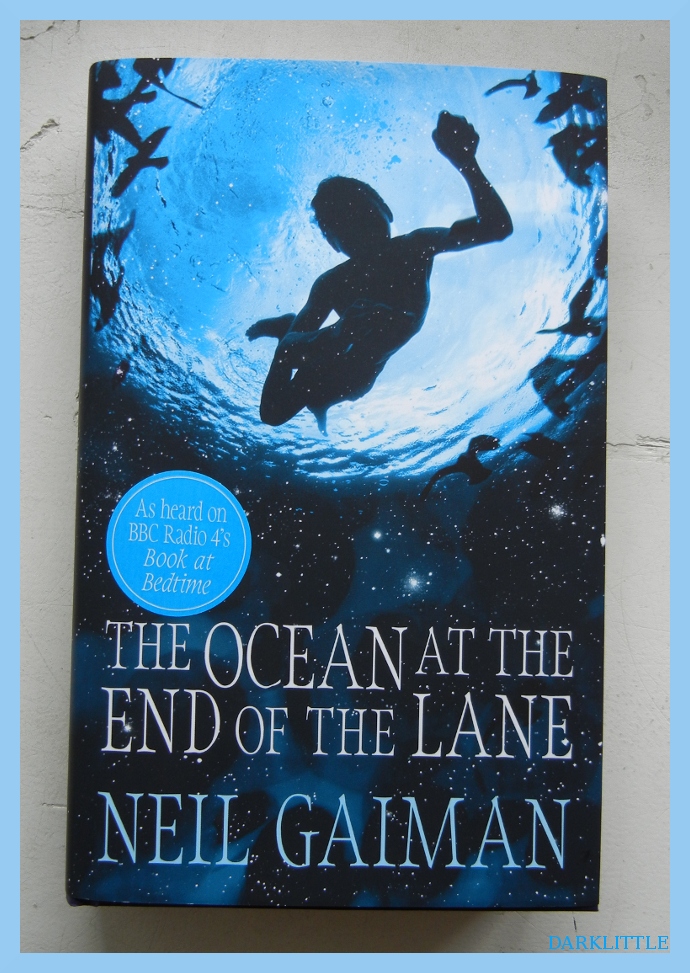
DSCN3840

Summary quoted from Headline¹:

It began for our narrator forty years ago when the family lodger stole their car and committed suicide in it, stirring up ancient powers best left undisturbed. Dark creatures from beyond the world are on the loose, and it will take everything our narrator has just to stay alive: there is primal horror here, and menace unleashed – within his family and from the forces that have gathered to destroy it.
His only defense is three women, on a farm at the end of the lane. The youngest of them claims that her duckpond is ocean. The oldest can remember the Big Bang.

My Thoughts:

The Ocean at the End of the Lane is set in a rural town, probably in the 20th century. Although there are lots of scenes that take place during daytime, there is a certain darkness that I felt spanning these scenes. This gave the setting quite a creepy atmosphere. Sometimes everything about the narrator’s house seemed so shabby and rotten. I think this was brilliant.

The main characters we meet in Ocean are the narrator (sometimes in the form of a grown up man, more often as a little boy) and his family, the narrator’s friend Lettie and her family and then there is a woman called Ursula Monkton. All characters are very believable, some friendly, some scary, some a little blurry. The blurriness of these characters might be because they are of lesser importance to the story. But as we are experiencing the story through the little boy, I think his mother shouldn’t be that blurry even though she only plays a minor role.

The story itself is interesting and I’m still not that sure what to think of it. I don’t know if Mr. Gaiman wants it to be interpreted or not. I’m not sure if it should simply stay a fantastic tale, or if there is supposed to be more depth to it. If there is, I think it’s clever. (I can’t tell much more without putting spoilers in here). If it’s just a tale, I think it’s a nice tale but it’s not very special at all. It reads quickly, it’s NOT for children, of that I’m sure, but it didn’t surprise me. The Ocean at the End of the Lane a very dark and scary tale of a boy who is unfortunate enough to be involved in something he doesn’t understand and fortunate enough to find good friends.

bohnen3s

¹ http://www.headline.co.uk/Books/detail.page?isbn=9781472200310