Recipe – Wiener Schnitzel

Hello everyone,

Are you hungry? If you are, I might have just the right thing for you. Today I’ve got a post for all the foodies among you. I proudly present:

How to make Wiener Schnitzel

Originally, you make Wiener Schnitzel from veal. You can also make them from pork, turkey, horse meat or chicken breasts. I really like Wiener Schnitzel made from chicken breasts. If you choose veal, buy butterflied top round steaks (also for pork and horse meat). For chicken and turkey schnitzel we use butterflied breasts.

As you will see, you’ll need flour, eggs, breadcrumbs and oil/lard. I’ll tell you how much you’ll probably need, but it’s always good to have more at home, in case you run out.

Ingredients for 4:
  • a minimum of 4 chicken breasts, or any of the above meats
  • approx. 3 cups of flour (Doesn’t really matter which one. Shouldn’t be self-raising though.)
  • 3 eggs
  • approx. 4-5 cups of breadcrumbs
  • Enough lard or oil to fry your schnitzel. It depends on how much you want to use. Do you want them to swim in fat, or do you just want them to sit comfortably in a 1-1.5 cm deep puddle of fat? 🙂
  • a pinch of salt
Instructions on How to Make Wiener Schnitzel:

Step 1: Softly pound your schnitzel on both sides. Don’t overdo it.

Step 2: Prepare three shallow bowls, e.g. soup bowls. Put the flour into the first one, the eggs into the second and the breadcrumbs into the third one. Add a pinch of salt to the eggs and whisk with a fork so the egg whites and the yolks are combined.

Step 3: Okay this is important. There are 3 little steps in this process and you can’t mix them up!

  1. Put the schnitzel into the bowl with the flour and evenly cover it with flour. There shouldn’t be any gaps.
  2. Now put the schnitzel into the bowl with the eggs and evenly cover it with eggs. Again: no gaps. (If there is excess egg on the schnitzel, just let it drip back into the bowl)
  3. The third step is to quickly put the schnitzel into the bowl with the breadcrumbs and cover it all over.

Repeat this process with all your schnitzel. When they are breaded, they are safe to lay aside on a dry and clean chopping board, or plate.

Step 4: When you’re done with all of them, heat the lard or oil in a large frying pan. When it’s hot, you can fry your schnitzel on both sides until they are golden brown.

Schnitzel

You can serve Wiener Schnitzel with parsley potatoes (cooked potatoes with butter and chopped, fresh parsley).

If you have any more questions, feel free to ask!

Bon Appetit!

Enhanced by Zemanta

Review – Wake by Anna Hope

Hi,

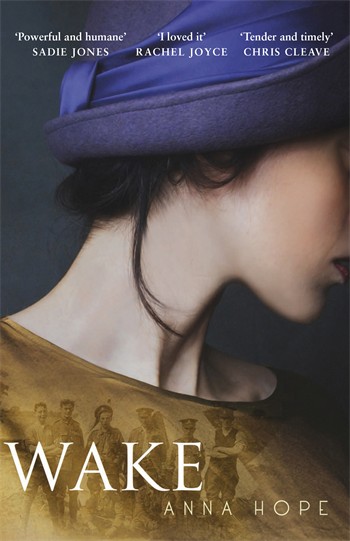
Last week, I had the pleasure of reading the German edition of Anna Hope’s Wake which is published by Rowohlt and called Abgesang. I won an ARC from Buchboutique. Thank you! The English original was first published by Transworld.

Wake
Image provided by Transworld¹
Synopsis quoted from Transworld¹:

Five Days in November, 1920:
As the body of the Unknown Soldier makes its way home from the fields of Northern France, three women are dealing with loss in their own way: Hettie, who dances for sixpence a waltz at the Hammersmith Palais; Evelyn, who toils at a job in the pensions office, and Ada, a housewife who is beset by visions of her dead son. One day a young man comes to her door. He carries with him a wartime mystery that will bind these women together and will both mend and tear their hearts.
A portrait of three intertwining lives caught at the faultline between empire and modernity, Wake captures the beginnings of a new era, and the day the mood of the nation changed for ever

My Thoughts:

Two years after World War I, the city of London still hasn’t fully recovered. While we walk the streets, we encounter men physically and mentally wounded by the war, but they try to keep smiling, just like the city tries to shine. In Wake, Anna Hope leads us to a glamorous dance hall, an underground club, a pensions office, the homes of different people and back to the battle fields. All these places have a unique feel to them and mirror the emotions of the characters moving within their walls and boundaries.

The three main characters, Ada, Evelyn and Hettie, are women in different stages of their lives. You could say that they stand for all women living through these years of sorrow and hope. I felt most drawn to Evelyn, as she is a well crafted character who allows us a vivid look at not only her past and her present, but also her possible future. Of course Wake offers male characters as well. One of them is charming Ed. He is quite a surprise and I really wish I could have found out more about his person, his thoughts and his dreams.

The connections between the three women slowly unfold and some don’t come as a surprise. But in my opinion Wake isn’t about suspense and thrill, it’s about the invisible wounds of war which won’t heal that fast, and it’s about finding happiness in a situation that seems hopeless. While its main focus is on the story of Ada, Evelyn and Hettie, Wake also has a second, parallel storyline that shows the funeral ceremony preparations for the body of the Unknown Soldier. I loved how much emotion was put into this sub plot. It was as if I had been there myself. Wake is a heart-wrenching debut that will transport you back in time and give you the women’s view on the consequences of war.

bohnen4s

¹http://www.transworldbooks.co.uk/editions/wake/9780857521941

Enhanced by Zemanta

Review – The Road To Reckoning by Robert Lautner

Happy Monday everyone,

I spent this weekend as a boy devouring an adventure novel. Yup, you read right, a boy 😀 That doesn’t happen often. I read Robert Lautner’s The Road To Reckoning which I was lucky enough to win in a Twitter competition by The Borough Press. We had to tweet our top three country & western songs that we would pick as a soundtrack for the book. I chose the following:

  • Ian Tyson: Cowboys Don’t Cry
  • Randy Newman: Gonna Take You There
  • Loretta Lynn: Don’t Come Home A’ Drinkin’

Now that I’ve read the book, it’s kinda creepy how well they fit. The titles of the first and second song fit perfectly and the third one is up to interpretation 😀

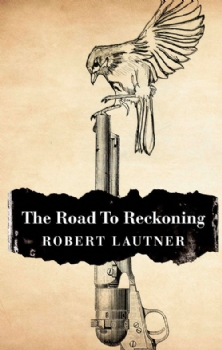
There’s something else I’d like to show you. The Borough Press posted a special on how the cover was designed and I think it’s worth a read. You can find it here.

Road To Reckoning
Image provided by The Borough Press¹
Synopsis quoted from The Borough Press¹:

Set in 1837, this is the remarkably poignant story of 12-year-old orphan Thomas Walker and his treacherous journey home through the wide open lands of America.‘I, to this day, hold to only one truth: if a man chooses to carry a gun he will get shot. My father agreed to carry twelve.’
Young Tom Walker cannot believe his luck when his father allows him to accompany him on the road, selling Samuel Colt’s newly-invented revolver. They will leave behind the depression and disease that is gripping 1830’s New York to travel the country together.
Still only twelve years old, Tom is convinced that he is now a man. Fate, it seems, thinks so too …
On the road west the towns get smaller, the forests wilder, and the path more unforgiving. A devastating encounter cuts their journey tragically short, and leaves Tom all alone in the wilderness.
Struggling to see a way home, he finds his only hope: ageing ranger Henry Stands, who is heading back east. Tom’s resolve to survive initiates an unlikely partnership that will be tested by the dangers of the road ahead, where outlaws prowl.

My Thoughts:

Set in the early 19th century, The Road To Reckoning takes us on a trip to the American frontier. Thomas Walker and his father make their way from New York to Pennsylvania and as I’ve never traveled that road, I had problems imagining the landscape that surrounded Thomas on his adventure. Too often, my mind created Wild West scenes where the woods and meadows of Pennsylvania should have been.

Twelve-year-old Thomas Walker is the main character in The Road To Reckoning. By letting the adult Thomas Walker narrate what happened in his childhood, Robert Lautner avoided all the difficulties that come with stepping into a little boy’s mind. This approach also added a touch of nostalgia to the tale which fit perfectly. I also really liked the character development of Henry Stands. I don’t want to take away too much, so you’ll only get three words: What a man!

The Road To Reckoning is an exciting tale that has everything you expect from a western-style adventure: horses, dirt, bad guys and guns. It reminds me of the western novels my father used to read when he was a boy. The Road To Reckoning might look like it’s targeted at adults, but I think teenagers will also take pleasure in a trip back to the American frontier.

bohnen4s

¹http://www.boroughpress.co.uk/titles/9780007511310/the-road-to-reckoning

Review – Wieland by Charles Brockden Brown

Hi,

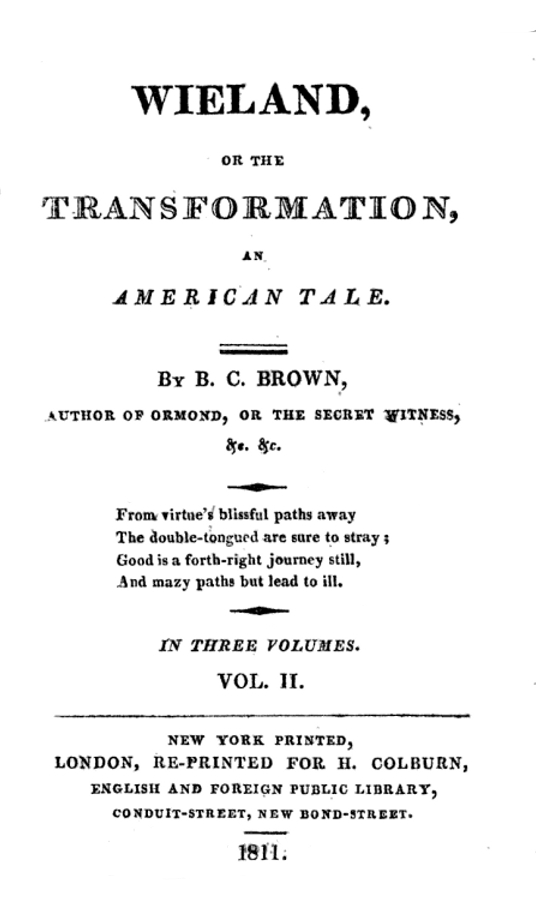
This post is part of an upcoming series of four posts on American 18th & 19th cent. Gothic novels. I have to read them in preparation for my final exams at university. If you now think, “Oh dear God no, how boring, I had to read that stuff in school,” be at ease, it’s just four reviews. And still, these books give me the creeps. Okay, I’m scared easily. You see, these writers laid the foundation for all those great books you are reading now. This first review is about Charles Brockden Brown’s Wieland, or the Transformation, an American Tale which was first published in 1798.

Image Source
Image Source
Synopsis:

Clara Wieland lives in a house on her brother’s estate in Mettingen, Pennsylvania. When they were children, the siblings’ father died a mysterious death. Now, the inhabitants of the estate start hearing strange voices and soon after, a brutal murder takes place.

My Thoughts:

Wieland leads us to 18th century Pennsylvania and a great part of the novel is set on the Wieland family estate. Charles Brockden Brown created a grey and dreary setting that is perfect for what’s about to happen. While reading, I sometimes imagined that the Wieland estate could easily be the setting for a much happier story. The estate would feel completely different, by just changing the right words. But we don’t need that for Wieland 😉 .

The events that take place are told by Clara Wieland, sister of Theodore Wieland. Clara is a very brave and smart woman. Sometimes her actions are so brave that they can be classified as plain stupid. When I gave it some thought though, I noticed that it was somehow strange that this brave woman falls gravely ill every time someone tells her something shocking. That doesn’t make sense. Nevertheless, I never doubted the female voice Brockden Brown used to tell this story.

Charles Brockden Brown starts his novel with an introduction of the characters and their background. It takes some time for the story to get going but when it finally does, it’s full of suspense (at least if you have no idea about the outcome). In the end, everything seems to be clear. However, when you think about it, a few things just don’t add up. Wieland is a novel for those who are bored with today’s thrillers and those who want to see how the American Gothic novel started out.

bohnen3s

Review – Winter’s Tale by Mark Helprin

Hi,

This is a book review, BUT I’m pretty exited about today’s release of the movie Winter’s Tale! If you haven’t heard about it, here’s the trailer:

When I first saw the trailer, I remembered the book the movie is based on, Winter’s Tale by Mark Helprin. I had come across it a few months before, but I decided not to read it because the reviews were sharply divided. For me it looked like one half was raving about the book being brilliant, while the other half was complaining about it being boring. I was intrigued by the synopsis but I didn’t want to risk reading a 700-page book that would bore me. But then came the trailer and I was fascinated. I mean, they wouldn’t make a movie out of a boring novel, right? There had to be something about the book that made it worth reading. So I read it. And here comes a review that was very hard to write.

Synopsis:

New York City is eagerly awaiting the 20th century when a burglar is saved by a white horse. This incident will change his life forever. About a hundred years later a young, formerly very rich, man makes his way east across the country to find out more about the mysterious golden salver his father left him. He intends to board a ship to Europe, but something seems to hold him in New York City. The city has changed with the years, but some things are still the same. Things like the cloud wall.

My Thoughts:

Winter’s Tale is a very complex novel. It’s main focus lies on New York City, but not the New York City we know. Not even New York City as it was around 1900, which is the time the first part of the novel is set in. Mark Helprin created his own version of this famous North American city we all know. If it doesn’t feel weird for you in Part I of the book, wait until you reach Part II. I was really confused! I had no idea what time I was in. Was that still the past (because the language and other details suggested that)? No it wasn’t, but where was I? If you try to find that out with the help of clues you usually pick up on the way, you’re lost. Well I was. I just started to accept it. This world is different even though it shares lots of similarities with ours.

Peter Lake for example. He looks human. He is human. If he would have had a better past, he might have become a normal, working-class citizen of New York. Things turned out a little different though and he starts to do things you can’t comprehend. You could call Peter Lake a main character, but I could be biased by the movie trailer. I’ve thought about it. There are so many characters in this novel. Every one of them is introduced in more than just two pages. At some point it got quite confusing to remember who was who. Many of these characters (e.g. Hardesty & Virginia) are very important and take up large parts of the novel. I can’t say if there really is a main character. What do you think?

As you can see, Winter’s Tale is a rather confusing adventure, but there is one thing that makes it worthwhile: the language! Okay, two. There’s also Athansor, the flying horse. If I had the time, and I hope I’ll have it someday, I would sit down and just read passages of the book for sheer pleasure. Mark Helprin can turn words into magic. Though I have to be honest with you. I did not fully understand Winter’s Tale, but as I’ve seen on the internet, there are many who didn’t, even after rereading it for the xth time. Do I think you should read it? Yes, if you have time on your hands. If you are terribly busy right now, read something light and get back to Winter’s Tale when you feel relaxed.

3 Star Rating: Recommended

I’m wondering how they made such a complex book into a movie. I’m looking forward to Akiva Goldsman’s interpretation!

Review – Seriously… I’m Kidding by Ellen DeGeneres

Hi,

I’ve been circling around this book for a while and when I was confronted with a three-hour train ride, I decided on buying it. Seriously… I’m Kidding by Ellen DeGeneres is what people will read if they only get to watch youtube clips of her show because it isn’t broadcast in their country.

Seriously
Image provided by Grand Central Publishing¹
Summary quoted from Grand Central Publishing¹:

I’ve experienced a lot the last few years and I have a lot to share. So I hope that you’ll take a moment to sit back, relax and enjoy the words I’ve put together for you in this book. I think you’ll find I’ve left no stone unturned, no door unopened, no window unbroken, no rug unvacuumed, no ivories untickled. What I’m saying is, let us begin, shall we?

My Thoughts:

In Seriously… I’m Kidding, Ellen takes us on a journey through her world in the spotlight and her innermost weird thoughts. She describes situations that are too strange to be true and more than once makes us laugh out very (!) loud. So be careful if you are in public. Let’s just hope you don’t read on an e-reader or listen to the audiobook. 😉 People can’t see what you’re reading, you know.

Unfortunately, there are chapters in this book that are less fun and, to be honest, quite boring. I had the feeling that those chapters were just there to fill up the pages. I don’t know about you, but I’d rather read a book that’s short and fun than long and boring.

As you can see, I have mixed feelings about Seriously… I’m Kidding. But as this book isn’t a novel, you could just skip the boring chapters as soon as you notice they get boring. I did read them all though. I’d say Seriously… I’m Kidding is a book for the quick laugh on a train, in the bathroom, or waiting for your doctor’s appointment. It’ll be like Ellen is right there with you, if you want to listen to her stories, or not.

bohnen3s

¹https://www.hachettebookgroup.biz/titles/ellen-degeneres/seriouslyim-kidding/9781455547784/

Review – The First True Lie by Marina Mander

Hello,

It’s the weekend again and I hope you’re enjoying it! In January, I got to read a shocking novel by Italian writer Marina Mander called The First True Lie (Italian title: La Prima Vera Bugia). It will be released in five days, on February 6, 2014. Canongate provided me with an ARC.

The First True Lie
Image provided by Canongate¹
Summary quoted from Canongate¹:

‘They always tell you that you shouldn’t tell lies, but without lies I’d already be in an orphanage.
This, in any case, is my first true lie’
Luca and his mum are like two peas in a pod in their special, fragile world.
Then, one winter morning his mother doesn’t wake up. Luca suddenly finds himself alone for the first time. Terrified of what telling the truth might bring, he decides to keep the biggest secret of his life. Luca goes along to school every day, pretending everything is as it always has been. But he returns home every night to a cold, dark house. So he begins to build a protective bubble with the memories of his mother, the words and stories he so loves – and his cat Blue – against the truth on the other side of the bedroom door.

My Thoughts:

The First True Lie leads us into Luca’s world which, from the start of the novel, mainly consists of the apartment he lives in. Marina Mander created a dull place for Luca’s story to take place. You have the feeling that as days go by, the walls are closing in on the little boy and his cat, the air becomes thicker, the light fades. The author skilfully sets the scene for this horrific plot.

Luca is the main character of The First True Lie. The novel is written from the little boy’s perspective and this is where its weakness lies. It’s written in an interior monologue and Luca’s thoughts often sound too grown-up to be a child’s. While the interplay of feelings like fear, stubbornness, strength and resignation is what makes Luca believable and lovable, certain thoughts leave the reader puzzled.

The First True Lie is a dramatic novel. It’s like a spiral that goes down. The plot is actually quite simple, but the book as a whole has maximum effect. Even though I had some credibility issues with Luca’s character, this haunting novel works out. The First True Lie left me shocked and thinking.

bohnen4s

¹http://www.canongate.tv/the-first-true-lie.html

Review – The Golem And The Jinni by Helene Wecker

Happy Friday everyone,

I’ve recently finished a wonderful book, The Golem and the Jinni by Helene Wecker. I heard about it a few months ago and thought that I might read it some time and as soon as I started reading, I regretted that I didn’t pick it up earlier ;). Warning: This isn’t just a novel with magical elements in it, it’s a great take on late 19th century immigration to the U.S.!

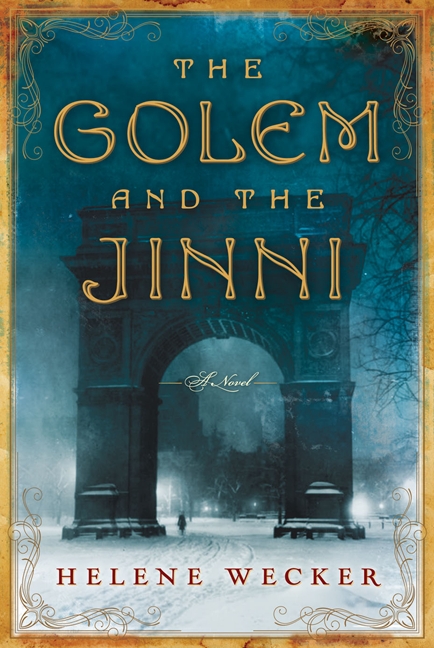
The Golem and the Jinni
image provided by HarperCollins¹
Summary provided by HarperCollins¹:

Helene Wecker’s dazzling debut novel tells the story of two supernatural creatures who appear mysteriously in 1899 New York. Chava is a golem, a creature made of clay, brought to life by a strange man who dabbles in dark Kabbalistic magic. When her master dies at sea on the voyage from Poland, she is unmoored and adrift as the ship arrives in New York Harbor. Ahmad is a jinni, a being of fire, born in the ancient Syrian Desert. Trapped in an old copper flask by a Bedouin wizard centuries ago, he is released accidentally by a tinsmith in a Lower Manhattan shop.

Struggling to make their way in this strange new place, the Golem and the Jinni try to fit in with their neighbors while masking their true natures. Surrounding them is a community of immigrants: the coffeehouse owner Maryam Faddoul, a pillar of wisdom and support for her Syrian neighbors; the solitary ice cream maker Saleh, a damaged man cursed by tragedy; the kind and caring Rabbi Meyer and his beleaguered nephew, Michael, whose Sheltering House receives newly arrived Jewish men; the adventurous young socialite Sophia Winston; and the enigmatic Joseph Schall, a dangerous man driven by ferocious ambition and esoteric wisdom.

Meeting by chance, the two creatures become unlikely friends whose tenuous attachment challenges their opposing natures, until the night a terrifying incident drives them back into their separate worlds. But a powerful menace will soon bring the Golem and the Jinni together again, threatening their existence and forcing them to make a fateful choice.

My Thoughts:

Helene Wecker’s novel about two unusual immigrants is mainly set in New York City around 1900 and she takes you right there. In The Golem and the Jinni, you’ll visit cramped, stuffy tenements as well as stately, airy mansions. You will explore a city that you’ve probably never seen before. Ms. Wecker has a gift for setting. I only wished there would have been a map somewhere in the book to place all the streets and to get a feeling for the distances the characters traveled.

The novel follows the two main characters, a female golem and a male jinni, on their search for freedom and happiness. Chava, the golem, is new to life. She learns fast and adapts to the Jewish immigrant society quickly. Her greatest fear is to hurt someone and so Chava stays wary. Ahmad, the jinni, was free to do whatever he wanted and now he is trapped in human form. His self-conscious and impatient character makes him roam New York City night after night. While Chava wants to be like anyone else, Ahmad only wants to be free again to return home to Syria.

In my opinion, these two main characters are the archetypal immigrants. They are very different from the rest of the people already living in the U.S.. Chava comes to stay and to make a living. She wants to fit in and still has to learn everything to survive. Ahmad is in the U.S. with the goal to return to Syria as soon as he is free again. He resembles those immigrants who came to America to work and make money just to return home again, although lots of them stayed in the end.

As you can see, The Golem and the Jinni is a novel about immigration and different cultures in New York City around 1900, but this book has even more to offer. It is a book about friendship and trust and it’s a riveting read.

bohnen4s

¹http://harpercollins.com/books/Golem-Jinni-Helene-Wecker/?isbn=9780062110831

Review – A Positive Experience Of Having Your Wisdom Tooth Removed

Hi,

This week comes with a review of something completely different, something quite personal actually. But I had the feeling that I have to share this with you.

There are many wisdom teeth removal horror stories out there, so you can imagine that I wasn’t actually thrilled when I found out that I had to part with my one and only wisdom tooth. Questions like “Will it hurt?”, “Will I bleed to death?”, “Will I lose my neighboring tooth by accident?” and “Will I turn stupid?” were high on my radar.

I did do some research though, so I found out that teeth in the lower jaw are often harder to remove than teeth in the upper jaw. (Phew, my tooth was indeed in my upper jaw 🙂 ) Another bonus, as I thought, was that my dentist probably wouldn’t have to cut because my tooth had already fully erupted years ago. And finally, it just had to go because I wasn’t able to clean it properly due to its position and not because it hurt.

So the big day finally came and my dentist gave me a local anesthetic (yup that injection). You feel three little pricks that really don’t hurt that much. It hurts more to bite your tongue! And then the region around my tooth got numb. My dentist took some pliers (or whatever that was 😀 ) and wiggled my tooth. I heard a faint cracking sound (like crisp bread). Now he took other pliers and pulled a bit and out it was. Wiggling and pulling didn’t even take two minutes. I didn’t feel a thing. As a final step, he stitched up the hole and I had to bite on a piece of gauze for 20 minutes (but I could do that while riding the bus home).

At home, I waited for the pain to come when the anesthetic stopped having effect. Well, the pain never came. No pain at all. All I did was put cold packs on my cheek for 20 minutes, with 20 minutes breaks, for 48 hours. I was able to chew after about 20 hours, so I ate solid food again (nothing too hard or crumbly!).

The last step I had to take, was to get my stitches removed. Well, this wasn’t bad either. I only noticed that my dentist cut the suture but I didn’t feel him pulling it out. So don’t be afraid. It’s not even comparable to gingivitis 😀

So why did I tell you all this? Because I think that someone needs to step up and say that getting your wisdom teeth removed doesn’t have to end in unbearable pain. I know it can, but not always!

What about you? Did you have a fairly good experience getting one of your wisdom teeth removed?

Review – Dear Life by Alice Munro

Hi everyone,

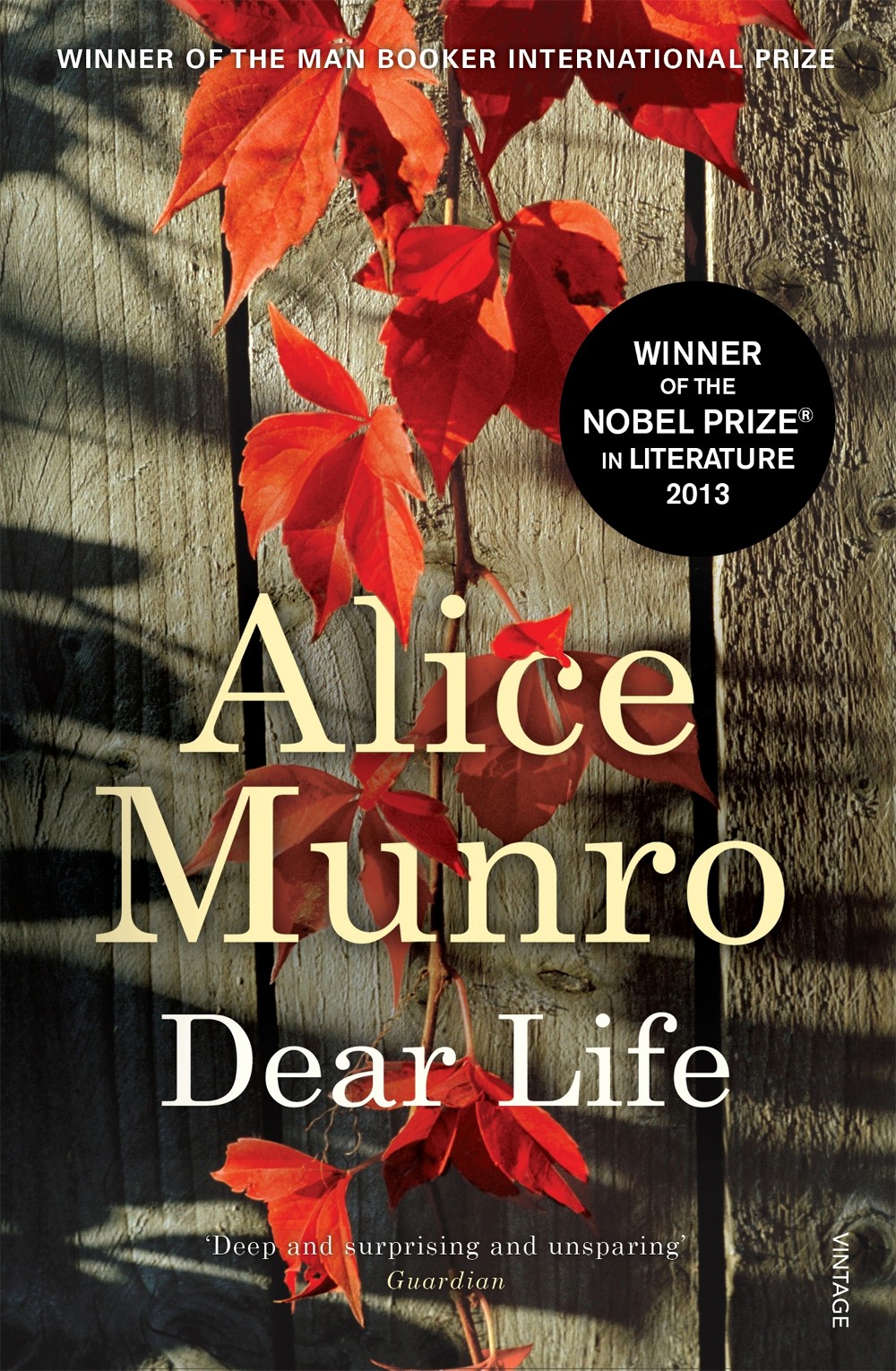
I hope you’re enjoying Sunday! Today I’ve got a review of Alice Munro’s short story collection Dear Life for you. Alice Munro won the Nobel Prize in Literature in 2013 and this is the first time I’ve read something she has written. I have to thank Random House UK for this copy. I got it to discuss it with other readers on Lovelybooks and to write a review.

Dear Life
Image provided by Random House UK¹
Summary quoted from Random House UK¹:

Alice Munro captures the essence of life in her brilliant new collection of stories. Moments of change, chance encounters, the twist of fate that leads a person to a new way of thinking or being: the stories in Dear Life build to form a radiant, indelible portrait of just how dangerous and strange ordinary life can be.

My Thoughts:

Dear Life is divided into two parts. The first one consists of ten short stories, the second of four autobiographical pieces. I’ll only review the short stories. As far as I can remember, all of them are set in Canada, many in the 20th century. Of course, Alice Munro knows her trade. She understands how to set the scene and how to transfer atmosphere.

In Dear Life, Alice Munro’s characters often seem to share similarities. The oppressed woman, the confused man and sometimes a child to tell us all about their problems. What struck me most, was how Mrs. Munro told stories from a child’s perspective. Especially in “Gravel”. You really think you are a child experiencing what the narrator experienced.

Unfortunately, technique isn’t everything. Don’t get me wrong, “To Reach Japan” was perfect! I also enjoyed “Amundsen” and “In Sight Of The Lake”. But the remaining seven short stories didn’t do the trick. They were okay, but I really expected more than just “okay”. While “To Reach Japan” was captivating and left me thinking, “Dolly” for example, left me indifferent.

As Alice Munro has won the Nobel Prize, I’m sure there are better short story collections out there. If life is like it is shown in Dear Life, it’s mostly dull, gray and tedious.

bohnen3s

¹http://www.randomhouse.co.uk/editions/dear-life/9780099578635